Emergency GDV treatment
Clinical source
ACVS GDV overview
Policy clause
Eligible illness, emergency hospital and surgery definitions
Quote implication
Compare identical benefit limits; no breed price measured

Separate Saint Bernard enrollment eligibility, emergency-care concerns and policy exclusions before comparing dog insurance.
Use these checkpoints to frame the literal question before reading the full guide.
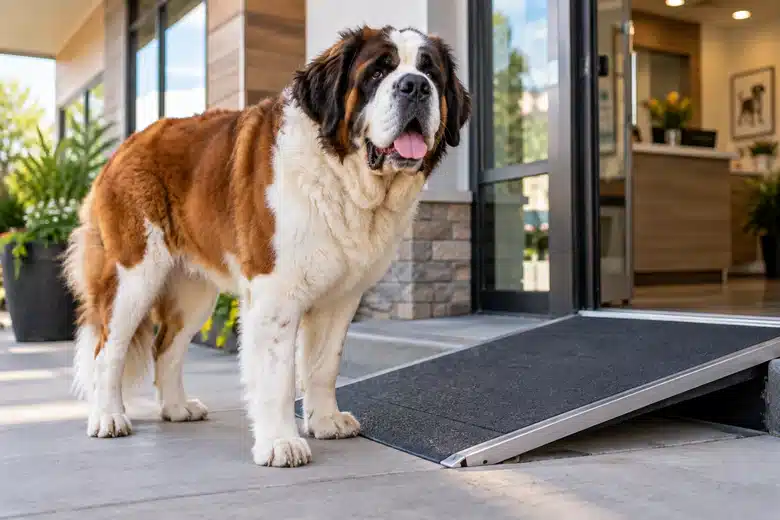
For a St. Bernard, first confirm that the insurer accepts the dog’s breed, age and address. Then examine emergency illness, hereditary-condition and pre-existing-condition terms. A documented breed concern is a reason to ask a precise coverage question, not proof that this dog will become ill or that a policy pays.
The sections below show how to verify the answer and what can change it.
The American College of Veterinary Surgeons names St. Bernards among breeds commonly seen with gastric dilatation-volvulus, or GDV. It describes GDV as a rapidly progressive emergency. That supports discussing an emergency-care plan with the veterinarian; it does not establish a probability for your dog, a premium surcharge or insurance payment. If signs suggest an emergency, seek veterinary care rather than waiting for an insurance decision.
| Issue to verify | Clinical source | Policy clause | Quote implication |
|---|---|---|---|
| Emergency GDV treatment | ACVS GDV overview | Eligible illness, emergency hospital and surgery definitions | Compare identical benefit limits; no breed price measured |
| Preventive procedure discussion | Individual veterinary recommendation | Preventive/elective exclusions or named benefit | Do not price it as emergency treatment |
| Previous abdominal symptoms | Dog’s own dated records | Preexisting definition and related-condition language | Ask how history is reviewed |
| Specialist transfer | Referring clinician’s plan | Referral, facility and claim-document requirements | Check usable care access separately from premium |
Texas insurance consumer guidance notes that breed restrictions and hereditary-condition treatment differ among companies. For this dog, record the exact breed and date of birth rather than substituting a generic large-dog category. A successful application answers eligibility; the later claim still depends on the event, timing, exclusions and selected benefits.
Keep policy terms, deductible, reimbursement and limits beside the quote so the comparison stays consistent.
Consider a hypothetical dog with no earlier symptoms that needs emergency surgery months after enrollment. The useful questions are whether illness cover has begun, the procedure and hospital charges are eligible, and the remaining limit can meet a large bill. In a different scenario, a veterinarian discusses a preventive operation during a routine visit: the reason for the procedure changes the policy inquiry. Neither scenario is an actual Saint Bernard claim or a promise of payment.
Professional breed context and a breed-specific document workflow are supported. No insurer is declared universally eligible, no breed premium is quoted, and no plan is ranked. The actual quote and state contract supply those individual answers.
No. Clinical risk and contractual coverage are different questions; check the policy’s actual language.
Use the correct Saint Bernard profile for a real comparison; a different breed is not a matched price.
These links provide independent government, academic or reference background. Actual policy wording controls insurance eligibility, benefits and claims.
Keep the policy terms beside the price, then continue to rates when the comparison is clear.